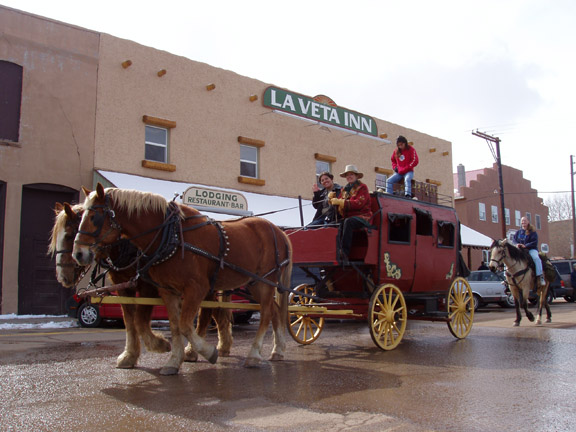
The newly renovated historic La Veta Inn
| One of only two incorporated towns in sparsely populated Huerfano County (orphan), La Veta, (population 924) is a small town located in south central Colorado that was founded by Col. John Francisco, a friend and contemporary of the more famous Kit Carson. Searching for a place to build an outpost, he stopped here and exclaimed, “This is paradise enough for me!” Ft. Francisco is located in town and an enlightening tour of the old fort exposes a wealth of history in the area. |
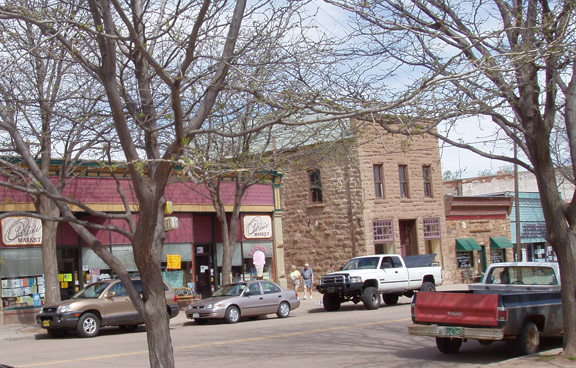
Main Street
|
The town is located on the Cuchara (Spanish for spoon) River. The expansive valley is bordered on the west by the Sangre de Christo (blood of Christ) mountain range that is part of the Rocky Mountains . This range extends from the middle of Colorado well south into New Mexico . It was named by Spanish explorers because of the way the sunlight at dawn turns the snowy peaks red each morning.
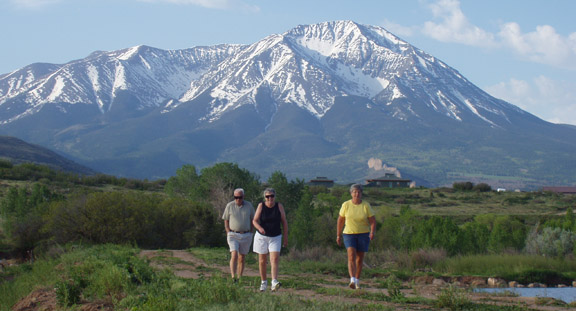 |
Although the Sangre de Christo mountains are lovely, it is the Spanish Peaks that will draw your attention. These two magnificent peaks are often simply called the East Peak and West Peak . Serving as landmarks for ancients and pioneers, the locals know them as the Wahatoya, meaning Breasts of the Earth – the meaning is evident at a glance. Native Americans considered them sacred and life giving. These two mountains, while very close in proximity to the Sangre de Christo range, are separate geological formations and not associated with the main mountain range at all. They are younger, volcanic formations called Stocks. These were two volcanoes, that never became volcanoes. They pushed up under the earth but never erupted. In time, as the earth eroded, the mountains were left looming above the valley. |
Of particular interests are the Great Dikes of the Spanish Peaks . These dikes, or walls, are the world’s best examples of natural dike walls. They stretch like spider legs reaching out from the West Spanish Peak . The same volcanic upheaval that created the mountains, created long cracks in the earth that filled with molten rock. In time, the earth eroded around these as well, leaving these walls that tower over 100 feet and crawl across the landscape for miles. These are reminiscent of the Great Wall of China – only they are not man made. La Veta flourished due to successful ranching and nearby mining operations. The historic Denver Rio Grand Railroad, once boasted the highest narrow gauge railroad in the world as it topped La Veta pass. Don’t come with expectations of anything that is posh and swanky. Rather, expect to travel back to the bygone days when soda bar and the neighborhood bakery are the local meeting places. La Veta boasts only two paved streets – and we like it that way. The locals are down to earth and very friendly. More recently, La Veta has attracted artists, musicians, authors, and others who are tired of the hustle and bustle of big city life. The wealth of arts within this small town is astounding. Local art galleries and shops offer an array of items to those wanting to enhance their collections. One visit here and you’ll understand why so many have chosen to make the area under the Wahatoya their home.
|
LODGING IN LA VEtA
|
|
|
|
- 1899 B&B Inn
314 South Main Street
La Veta, CO
719-742-5599
The 1899 Inn has been in the National Register of Historic Places for over twenty years and is one of La Veta's original quarried sandstone structures. It was fully renovated in 2008. We have 5 rooms upstairs, 2 with private baths and 3 with shared bath. The breakfasts are extremely popular and it is just around the corner from the Francisco Center for the Perfomring Arts.
|
|
- Circle The Wagons RV Park
126 W. 2nd
La Veta, CO
719-742-3233
RV Park with full hookups and even quaint little campers for rent. Conveniently located only four blocks from the Quilt Luminarium venue you will enjoy the sounds of the Cucharas River.
|
|
- Inn at the Spanish Peaks B&B
310 E. Francisco
La Veta, CO 81055
719-742-5313
This southwestern style, deluxe Bed & Breakfast has 3 Suites. Private Baths and Decks. Full gourmet breakfast. Non-smoking & adult only. It is a short four-block walk from this B&B to the Francisco Center for the Performing Arts.
|
|
- La Veta Inn
103 W Ryus
La Veta, CO 81055
719-742-5566
Beautiful historic boutique Inn located in the heart of La Veta, featuring 17 updated, artist-inspired rooms and suites that will make you feel right at home. With views of the Spanish Peaks, and overlooking the patio of the new onsite restaurant and bar, Agatha's, you're sure to have an exceptional stay. One block walking distance to the Quilt Luminarium and next door to Ricky Tims Inc.
|
|
- Two Fox Cabins & RVs
404 Oak Street
La Veta, CO
719-742-0260
Two Fox Cabins & RVs has newly renovated cabins as well as full-hookup RV sites. These quaint, rustic cabins are extremely popular with visitors to La Veta and the Cucharas River runs through the property. Only a two-block walk to the Francisco Center for the Performing Arts.
|
|
- The Warehouse Suite
102 Ryus Ave
La Veta, CO
719-742-5278
Built in 1903, the Kincaid Building has long been a part of La Veta's history and downtown. The upstairs was once a dance hall, movie theatre, meeting place, even a church! In 2007 it was restored to a 4 bedroom, 2 bath luxury apartment - available for short-term rental. One block walking distance to the event venue.
|
|
- Best Western Rambler
457 US Highway 85 87
Walsenburg, CO
719-738-1121
Located 20 minute drive by car from La Veta in Walsenburg.
|
|
- I Love Lucy's RV Park
226 W. Grand St.
La Veta, CO 81055
719-742-3252
Offering 27 fully shaded full hook-up sites (20/30amp), Lucy's RV Park has it all: green grass on every site, nice clean showers, and friendly service in this new family-owned business. Located only four blocks from the event venue.
|
To learn more about the area or to plan extra-curricular activities, check out these La Veta Websites:
La Veta Cuchara Chamber of Commerce – www.lavetacucharachamber.com
Of particular interests are the Great Dikes of the Spanish Peaks . These dikes, or walls, are the world’s best examples of natural dike walls. They stretch like spider legs reaching out from the West Spanish Peak . The same volcanic upheaval that created the mountains, created long cracks in the earth that filled with molten rock. In time, the earth eroded around these as well, leaving these walls that tower over 100 feet and crawl across the landscape for miles. These are reminiscent of the Great Wall of China – only they are not man made. La Veta flourished due to successful ranching and nearby mining operations. The historic Denver Rio Grand Railroad, once boasted the highest narrow gauge railroad in the world as it topped La Veta pass. Don’t come with expectations of anything that is posh and swanky. Rather, expect to travel back to the bygone days when soda bar and the neighborhood bakery are the local meeting places. La Veta boasts only two paved streets – and we like it that way. The locals are down to earth and very friendly. More recently, La Veta has attracted artists, musicians, authors, and others who are tired of the hustle and bustle of big city life. The wealth of arts within this small town is astounding. Local art galleries and shops offer an array of items to those wanting to enhance their collections. One visit here and you’ll understand why so many have chosen to make the area under the Wahatoya their home. To learn more about the area or to plan extra-curricular activities, check out these La Veta Websites:
La Veta Cuchara Chamber of Commerce – www.lavetacucharachamber.com